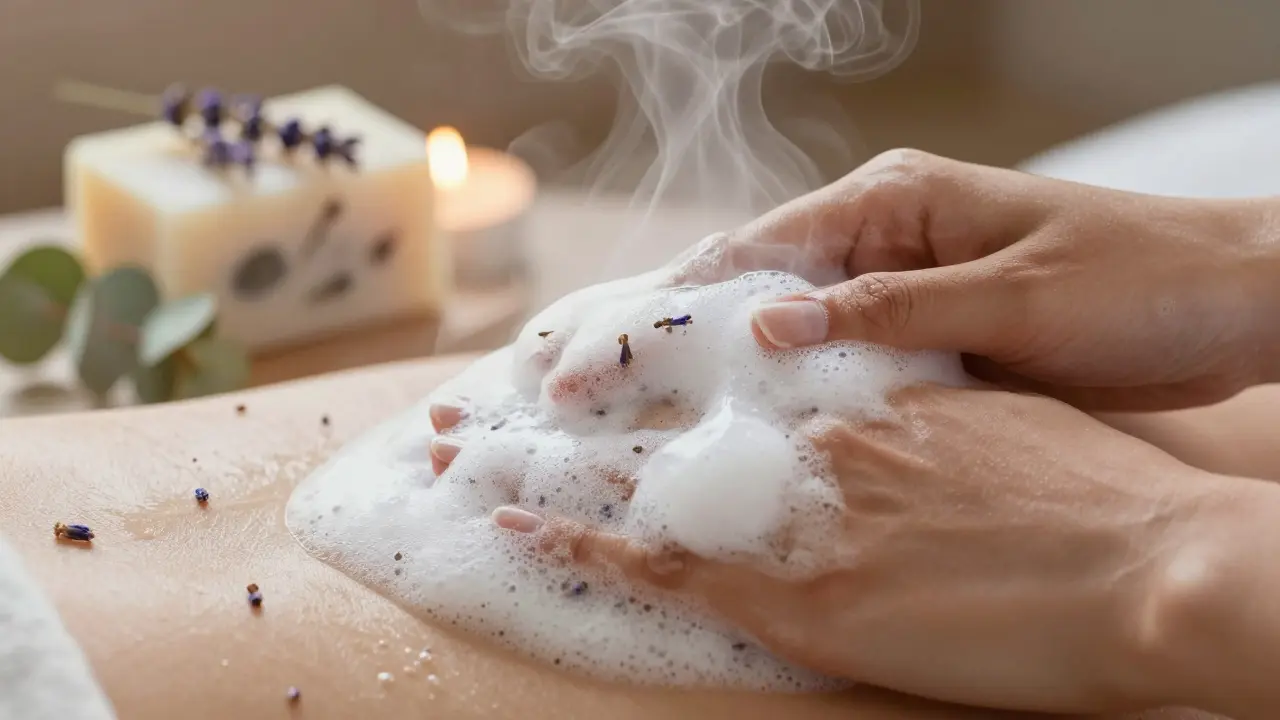
Imagine the steam rising from warm water, the scent of lavender or eucalyptus filling the air, and the slick, smooth sensation of rich lather sliding over skin. This isn't just a bath; it's an experience. The soapy massage is more than a trend-it’s a return to ancient practices of cleansing and connection that blend hygiene with deep relaxation. Whether you are looking to unwind after a long week or seeking a way to deepen intimacy with a partner, this ritual offers a unique combination of sensory pleasure and physical relief.
Many people think of massage as something that happens on a table with oil. But when you introduce soap and water, the dynamics change completely. You get the benefits of exfoliation, hydration, and muscle release all in one session. It’s messy, yes, but that’s part of the fun. Let’s break down how to do it right, what tools you need, and why this practice has stood the test of time.
What Exactly Is a Soapy Massage?
A soapy massage involves using liquid soap, body wash, or specialized massage bars to create a lubricated surface on the skin. Unlike traditional oils which stay tacky, soap creates a slippery, fluid layer that allows for long, gliding strokes. The friction is minimal, which means you can cover large areas of the body without causing irritation.
The core idea here is dual-purpose. You are cleaning the skin while simultaneously working out tension in the muscles. Think of it like a spa treatment at home. You rinse away dirt and dead skin cells, leaving your pores clear, while the manual pressure improves circulation. It’s practical yet deeply indulgent. For those who find oil too heavy or difficult to clean up, soap offers a refreshing alternative that rinses away easily.
Gathering Your Tools: What You Need
You don’t need expensive equipment to start. In fact, simplicity is key. Here is what you should have ready before you begin:
- Luxurious Soap: Look for creamy body washes or high-quality bar soaps with moisturizing ingredients like shea butter or coconut oil. Avoid harsh detergents that strip natural oils.
- Warm Water Source: A showerhead with adjustable pressure or a handheld sprayer works best. If you’re in a tub, ensure the water temperature is comfortable, around 100-104°F (38-40°C).
- Soft Towels: Have several plush towels nearby. One for drying off, others for cushioning if you’re lying on a hard surface.
- Ambiance Enhancers: Candles, soft music, or essential oils can set the mood. Dim lighting helps reduce visual distractions and encourages mental relaxation.
The choice of soap matters more than you might think. A thin, runny gel won’t provide enough slip. You want something thick and foamy. Cream-based cleansers often work best because they maintain their texture even when mixed with water, providing consistent lubrication throughout the session.
Step-by-Step: How to Perform a Soapy Massage
Whether you are treating yourself or inviting a partner, the technique remains similar. The goal is slow, deliberate movements that engage both the giver and receiver. Here is how to structure the session:
- Prepare the Space: Ensure the room is warm. Cold drafts can kill the mood instantly. Light candles and play some low-fi beats or ambient nature sounds.
- Wet the Skin: Start by wetting the area you intend to massage. Warm water opens pores and prepares the skin for absorption.
- Apply Generously: Lather up your hands or the recipient’s back. Don’t skimp on the soap. You want a thick, luxurious foam that covers the entire surface.
- Use Long Strokes: Begin with broad, sweeping motions. Use the palms of your hands rather than fingertips. Glide from the lower back up to the shoulders, then down the sides. The slipperiness allows you to use less pressure while still feeling effective.
- Focus on Tension Points: Once the general area is covered, focus on specific knots. Use circular motions with your thumbs on tight spots like the trapezius muscles or calves.
- Rinse Slowly: Instead of rushing to wash it off, let the water trickle slowly over the skin. This adds another layer of sensory input-warm water cascading over relaxed muscles.
If you are doing this with a partner, communication is vital. Ask about pressure levels constantly. What feels good to one person might feel ticklish or uncomfortable to another. The beauty of the soapy massage is its adaptability. You can adjust the amount of soap or water to change the level of slipperiness based on feedback.
The Benefits Beyond Relaxation
Why go through the trouble? The answer lies in the physiological and psychological benefits. First, there is the aspect of Skin Health: Regular gentle exfoliation removes dead skin cells, promoting cell turnover and resulting in smoother, brighter skin.. Many commercial scrubs are abrasive, but the mechanical action of massaging with soap provides a mild, non-irritating exfoliation.
Secondly, consider the mental health angle. Stress causes us to hold tension in our shoulders, neck, and jaw. A dedicated time for touch and care releases oxytocin, the bonding hormone, while lowering cortisol, the stress hormone. It’s a reset button for your nervous system. In a world where we are constantly connected digitally, taking an hour to disconnect and focus on physical sensation is radical self-care.
For couples, this ritual builds trust. Being vulnerable with someone else, allowing them to touch and cleanse you, requires a certain level of comfort and safety. Over time, these shared experiences can strengthen emotional bonds. It’s not just about sex; it’s about intimacy in its broader sense.
Common Mistakes to Avoid
Even simple rituals can go wrong if you aren’t careful. Here are a few pitfalls to watch out for:
- Using Harsh Chemicals: Some antibacterial soaps contain triclosan or strong fragrances that can irritate sensitive skin. Stick to hypoallergenic, fragrance-free options if you have eczema or allergies.
- Slipping Hazards: A soapy floor is dangerous. Always use a non-slip mat in the shower or tub. If you’re doing this outside the bathroom, protect your floors with towels or plastic sheeting.
- Rushing the Rinse: Leaving soap residue on the skin can lead to dryness or itching. Take your time to rinse thoroughly, especially in folds of the skin like behind the knees or under the arms.
- Ignoring Temperature: Water that is too hot can scald sensitive, relaxed skin. Test the temperature on your wrist before applying it to larger areas.
Another mistake is expecting instant results. While you will feel relaxed immediately, the cumulative benefits for skin texture and stress management build over weeks of regular practice. Consistency is key.
Cultural Context and Modern Trends
The concept of combining cleansing with massage isn’t new. In many cultures, communal bathing and scrubbing are central to social life. From Turkish hammams to Japanese onsen, the act of washing together is seen as a form of purification and community building. In recent years, Western wellness culture has rediscovered these traditions, adapting them into private, personalized rituals.
Today, you’ll see soapy massages featured in luxury spas worldwide. They often incorporate aromatherapy, using essential oils infused into the soap to target specific moods-energizing citrus for mornings, calming chamomile for evenings. At home, you can replicate this by choosing soaps with natural essential oils rather than synthetic perfumes.
Interestingly, the rise of self-care content on social media has popularized these routines. People are sharing their setups, favorite products, and techniques. This democratization of wellness makes it easier for anyone to try, regardless of budget. You don’t need a $200 spa day to enjoy these benefits. A good bar of soap and ten minutes of focused attention are enough.

Intimacy and Connection
Let’s address the elephant in the room. For many, the soapy massage is inherently sensual. The tactile nature of the activity, combined with the vulnerability of being naked and wet, naturally leans towards eroticism. That’s okay. There’s no rule that says relaxation must be platonic.
If you are exploring this with a partner, it can be a wonderful foreplay activity. It slows things down, encouraging mindfulness and presence. Instead of rushing towards a climax, you spend time appreciating each other’s bodies. The soap acts as a bridge, making touch feel safer and more playful.
However, it’s important to distinguish between romantic intimacy and professional services. While some individuals may seek out Bangkok escort services for companionship during travels, the true value of the soapy massage lies in mutual consent and genuine connection. Authentic intimacy cannot be bought; it is built through trust, communication, and shared experience. When done with a partner you know and love, this ritual becomes a language of affection that words alone cannot express.
Conversely, if you prefer solo sessions, view it as an act of self-love. Learning to enjoy your own touch, to appreciate your own body, is a powerful step towards body positivity. It shifts the focus from appearance to sensation. How does your skin feel? Where is the tension held? These questions foster a deeper relationship with yourself.
Troubleshooting Your Session
Did the soap sting your eyes? Did the water get too cold? These small issues can disrupt the flow. Here’s how to handle common problems:
- Eye Irritation: Keep a damp cloth nearby to gently wipe away any soap that gets near the eyes. Avoid getting soap directly on the face unless you are using a product specifically designed for facial cleansing.
- Dry Skin Afterward: Even though soap cleanses, it can sometimes leave skin feeling tight. Follow up with a light body lotion or oil while the skin is still slightly damp to lock in moisture.
- Lack of Slip: If the soap isn’t creating enough lather, add a little more water or switch to a creamier formula. You can also mix a tablespoon of coconut oil into your body wash for extra glide.
Remember, there is no “perfect” way to do this. The goal is enjoyment, not perfection. If something doesn’t work, adjust and keep going. The process itself is the reward.
Final Thoughts on the Ritual
The soapy massage is a simple yet profound practice. It combines the basic human needs for cleanliness and touch into a single, satisfying experience. Whether you use it to de-stress after work, connect with a partner, or simply pamper yourself, it offers a pause in the chaos of daily life.
In a fast-paced world, slowing down to savor the sensation of warm water and rich lather is a rebellion against haste. It reminds us that our bodies deserve care, attention, and kindness. So next time you step into the shower, consider turning it into a sanctuary. Grab that nice soap, turn down the lights, and give yourself-or someone special-the gift of presence.
Can I use regular hand soap for a soapy massage?
It is not recommended. Hand soaps are often formulated to cut through grease and bacteria, which means they can be very drying and harsh on body skin. Look for body washes labeled as "moisturizing," "creamy," or "hydrating." These contain emollients that protect your skin barrier while providing the necessary slip for massage.
How long should a soapy massage last?
There is no strict rule, but most people find 15 to 30 minutes to be ideal. This is enough time to relax the muscles and enjoy the sensory experience without leading to fatigue or coldness. If you are doing it with a partner, you might alternate roles, extending the total time to an hour or more.
Is it safe to do a soapy massage on broken skin?
No, you should avoid massaging over cuts, abrasions, or open wounds. Soap can cause stinging and irritation, and introducing bacteria into open wounds increases the risk of infection. Wait until the skin has fully healed before resuming massage treatments in that area.
What is the difference between a soapy massage and an oil massage?
Oil provides deeper, slower friction and leaves the skin coated in nutrients afterward. Soap provides higher slip, allows for faster, broader strokes, and cleanses the skin simultaneously. Oil is better for deep tissue work and long-term hydration, while soap is better for relaxation, exfoliation, and easy cleanup.
Can I perform a soapy massage outside the shower?
Yes, but it requires preparation. You will need a basin of warm water, a spray bottle, and plenty of towels to manage the mess. Using a waterproof mat on the floor is essential. However, the convenience of running water makes the shower or bathtub the preferred location for most people.
Write a comment